
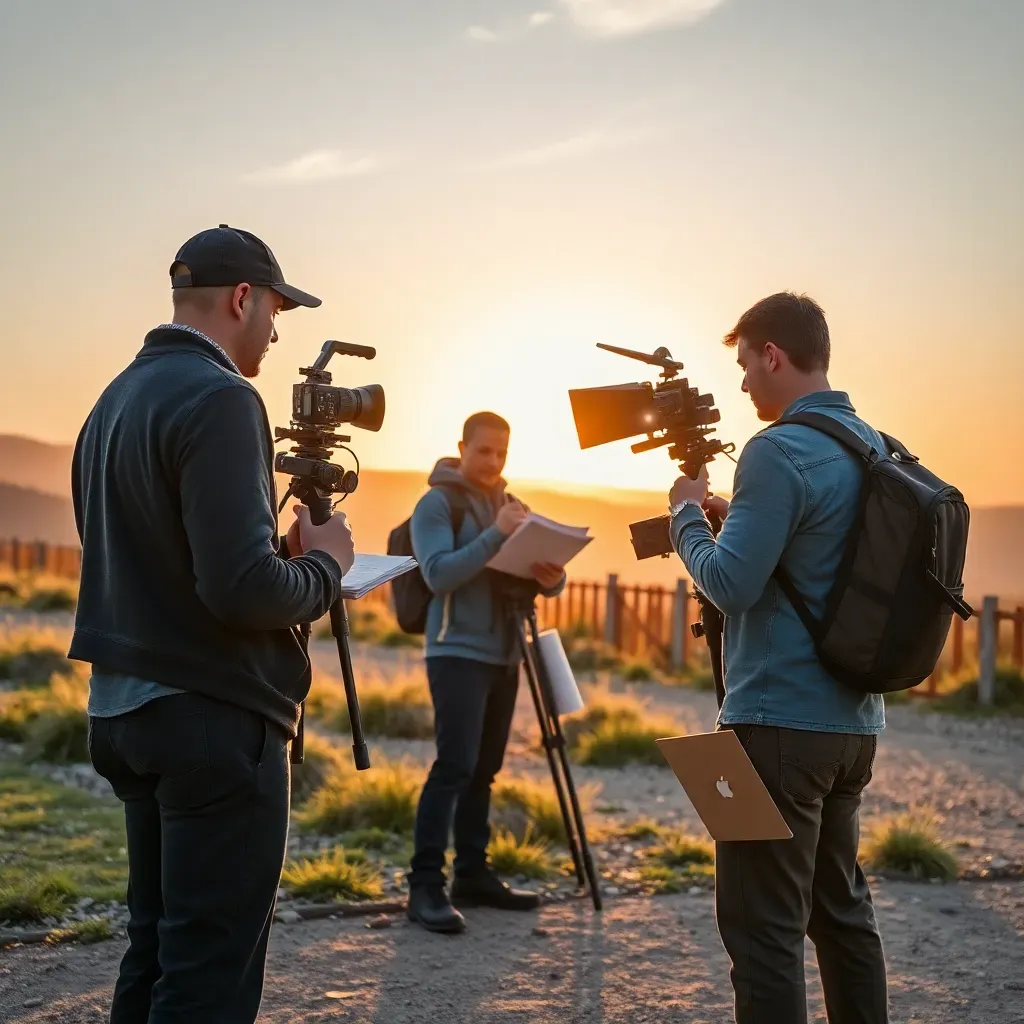
Filming in Madrid: Permits, Studios & Production Logistics
From Madrid Film Office permits and Secuoya stages to Plaza Mayor backdrops, Patrimonio Nacional palaces and the 30% Spanish tax deduction — everything international productions need to plan a shoot in Madrid
Filming in Madrid — rodaje en Madrid — is one of the most in practice rewarding production exercises in southern Europe. The city pairs a deep crew base trained on Money Heist and Élite with a permit landscape set up by the Madrid Film Office at the Ayuntamiento de Madrid. Visual signatures (Plaza Mayor, Gran Vía, Retiro Park, the Royal Palace, Malasaña's plazas, the Cuatro Torres skyline) that producers chase from Mexico City to Seoul. Netflix has built one of its largest European production hubs in Tres Cantos, Secuoya Studios anchors the city's stage capacity, and the Spanish tax deduction returns 30% on the first €1M of qualifying spend and 25% on the remainder — meaningful funding leverage on top of a competitive cost base. This guide walks through what global teams actually need to know to plan a production in Madrid: where to file permits. This studios match which formats, which barrios deliver which looks, when to shoot, what the Spanish deduction brings to the budget, and how lead times shape your schedule. We work the Madrid permit offices, stages and crew rosters each week, so the focus here is operational, not editorial. Use it as a hub — each section links out to a deeper guide for the area you need to plan around.
As Fixers in Spain, we bring local expertise to international productions filming in Spain. Our team's deep knowledge of local regulations, crew networks, and production infrastructure ensures your project runs smoothly from pre-production through delivery.
ACT 01
Why Madrid for Production
Industry Depth, Infrastructure and the Looks Producers Come For
Madrid is the operational center of Spanish audiovisual production. The reasons global teams keep choosing it for film in Madrid go well beyond the postcards — it is one of the few European capitals that combines a top-tier crew base, a national funding ecosystem, the most active streaming hub in southern Europe, and a studio belt large enough to host Netflix-scale series.
- Spain produces 250+ feature films a year, with the majority crewed and funded out of Madrid
- Madrid Film Office, ICAA and the 30% national deduction sit within a single ride across the city
- Crew rosters cover Spanish, English, Portuguese, French and Italian — and increasingly Arabic and Mandarin for inbound co-productions
- Plaza Mayor, Gran Vía, Retiro, the Royal Palace and the Cuatro Torres business district all sit inside one shooting day
Industry Depth and the Madrid Production Ecosystem
Madrid film production runs on an unusually dense ecosystem for a city of its size. The ICAA sets national policy and certifies projects culturally for the tax deduction. The Madrid Film Office at the Ayuntamiento handles permits and location liaison for the municipality. Major TV networks (RTVE, Atresmedia, Mediaset España, Movistar+) and global streamers (Netflix, Amazon Prime Video, Disney+, HBO Max) all keep Madrid commissioning teams. Netflix's Tres Cantos production hub is one of its largest outside the United States. That density means union talent, post houses, gear rental, insurance, customs brokers and legal counsel for global shoots all sit within the same metro footprint. For inbound shoots, this translates to fewer hand-offs and shorter pre-production cycles than in cities where the production stack is split across many regions.
Studio and Stage Infrastructure
The Greater Madrid studio belt. Secuoya Studios in Tres Cantos, Telson in Pozuelo, Pinewood-aligned facilities and several mid-size stages in the Henares corridor — gives the city more than 30,000 m² of soundstage capacity within 40 minutes of central districts. That matters because global shoots can base talent and creative leads in central Madrid hotels (Salamanca, Chamberí, Centro) and still keep production trucks and stage builds inside the standard travel-time radius. Backlot space, water tanks, motion-control rigs and LED virtual production volumes are all ready without leaving the Comunidad de Madrid.
Crew, Talent and Language Coverage
Madrid crews are deep in each department. Cinematographers, gaffers, key grips, sound mixers, art directors, costume designers, hair and makeup, VFX supervisors and stunt coordinators are ready at the rates set by the Convenio Estatal de la Industria de Producción Audiovisual. English fluency is standard at HOD level and increasingly common down to the assistant grades — a generation of Spanish crew has come up working on La Casa de Papel, Élite, The Crown second-unit work and major commercials. This has built the bilingual workflow that inbound producers expect. Talent agencies cluster in Salamanca and Chamartín, casting directors handle global SAG and Equity-style negotiations as a matter of course, and Madrid is the easiest Spanish city to source bilingual second units for shoots running in Portuguese, French, Italian, Arabic or Latin American Spanish dialects.
Signature Visual Looks
The visual reasons producers come to Madrid are well-known: Plaza Mayor. The Habsburg-era core for period drama, Gran Vía for early-twentieth-century grandeur and modern city beats, Retiro Park for romance and intimate drama, the Royal Palace and the Almudena Cathedral for landmark moments, Malasaña and Chueca for modern youth and music video, Lavapiés for gritty modern realism, the Cuatro Torres business district for hard-edged modern and tech narratives, and the surrounding Sierra de Guadarrama for one-hour drives to mountain and lake landscapes. Each of these is briefed in detail below, with guidance on how shoot in Madrid workflows actually clear them.
ACT 02
Filming Permits in Madrid
Madrid Film Office, the Ayuntamiento and Patrimonio Nacional
Madrid filming permits are set up by the Madrid Film Office (Oficina de Promoción del Cine y Audiovisual de Madrid) at the Ayuntamiento de Madrid in partnership with the Policía Municipal and, where royal sites are involved, Patrimonio Nacional. This section gives you the operational summary — for the full step-by-step on records, fees and edge cases, see our deep-dive guide.
- Madrid Film Office at the Ayuntamiento is the primary contact for street, park and public-domain filming inside the municipality
- The Policía Municipal sets up traffic stops, road closures and security perimeters
- Metro de Madrid and Renfe Cercanías need their own permits with separate lead times
- Patrimonio Nacional governs the Royal Palace, Almudena, Aranjuez, El Escorial and other royal sites under its own filming office
- Comunidad de Madrid handles permits for shoots that cross city boundaries into Alcalá, Aranjuez, El Escorial or the Sierra
Madrid Film Office at the Ayuntamiento
The Madrid Film Office is the single entry point for most public-domain filming inside the city of Madrid. They handle requests for streets, plazas, parks, public gardens and city-owned buildings. Standard street shoots with a small footprint (handheld, no truck, no crew base) are mostly clearable in two to three weeks. Larger setups — full lighting packages, power packs, picture cars, base camp — extend the lead time to four to five weeks and trigger Policía Municipal planning. Madrid Film Office reviews shoot synopses, neighbourhood impact, the local representative on file and the production's insurance certificate before issuing the autorización de rodaje. There is no filming fee in most public spaces inside the M-30 ring, although certain landmark sites (Plaza Mayor, Templo de Debod, Gran Vía with closures) carry per-day occupation fees.
Policía Municipal and Traffic Coordination
Anything that affects road traffic, needs a security perimeter, or involves stunts, weapons, pyrotechnics, drones or large crowd scenes routes through the Policía Municipal. Closures along Gran Vía, Calle Alcalá, Paseo del Prado or the M-30 ring road are in tech possible but need the longest lead times in the city — six to ten weeks is realistic, and full Gran Vía closures are tightly tight and almost never ready during major political events, the Madrid Marathon or the Christmas illuminations period. Drone operations also need AESA (Agencia Estatal de Seguridad Aérea) authorisation. Flights anywhere near Barajas way paths or central no-fly zones need extra NOTAM planning.
Patrimonio Nacional and Specialist Authorities
Filming inside or in the immediate perimeter of major royal heritage sites — the Palacio Real, Almudena Cathedral, Palacio de Aranjuez, Real Sitio de El Escorial, La Granja de San Ildefonso — is ruled by Patrimonio Nacional, not the Madrid Film Office. Lead times here run six to ten weeks, location fees are major, and approvals are conditional on shot lists, gear lists and at times script review. Museums (the Prado, Reina Sofía, Thyssen) operate their own filming offices with similar lead times. For shoots crossing into the surrounding Comunidad — Alcalá de Henares (UNESCO), Chinchón, Manzanares el Real — each municipality has its own filming desk. The Comunidad de Madrid Film Office can set up when a shoot spans several.
ACT 03
Studios in Madrid
Secuoya, Telson, Tres Cantos and the Henares Corridor
Madrid studios sit in a ring around the city, all reachable from central districts in under 45 minutes. The lineup below is a working summary — the full sourcing guide with stage dimensions, ceiling heights, water tank specs and virtual production volumes lives in our dedicated studios article.
- Secuoya Studios (Tres Cantos) — flagship complex anchoring Netflix's southern European production hub
- Telson (Pozuelo de Alarcón) — long-standing TV and commercial stages west of Madrid, deep tech crew base
- Pinewood-aligned facilities and Estudios Picasso — flexible mid-size stages popular for series and commercials
- Ciudad de la Luz (Alicante) — when Madrid stage capacity is fully booked, this top-spec coastal complex is a 90-minute AVE ride away
Secuoya Studios — Tres Cantos
Secuoya Studios in Tres Cantos, on the northern edge of the metropolitan area, is the largest single-site film studio in the Comunidad de Madrid and the operational anchor of Netflix's Spanish production push. Many soundstages totalling over 22,000 m² of stage space, a backlot, post-prod facilities and on-site offices sit on the campus. It has hosted shoots from Money Heist (La Casa de Papel) and Élite to global series for the major streamers. For inbound shoots running long-form drama, Tres Cantos is the default first call when central Madrid hotel bases are needed and when stage-to-location turnarounds need to stay under 45 minutes.
Telson and the Western Belt
Telson, in Pozuelo de Alarcón to the west of Madrid, is one of the older operating studio campuses in Spain and stays a workhorse for both Spanish and global shoots. Several stages, scenic shops, dressing facilities and on-campus parking sit on a single site — useful when production trucks would otherwise struggle with central Madrid's loading restrictions and Low Emission Zone (Madrid 360) rules. The wider western belt — Pozuelo, Boadilla del Monte, Las Rozas — also concentrates gear rental and post houses serving the Spanish television industry. This keeps build-day logistics inside one tight geography.
Mid-Size Stages and the Henares Corridor
Beyond the two flagships, Madrid has a healthy population of mid-size stages along the A-2 Henares corridor. Coslada, San Fernando de Henares, Torrejón — plus a cluster of studios in the southern industrial belt around Getafe and Leganés. These facilities suit commercials, music videos, fashion and editorial production, and they are where most of the city's prop houses, art-department workshops and grip/lighting rental warehouses are located. Bookings here are mostly faster and more flexible than at Tres Cantos or Telson, and the day rates reflect that.
Ciudad de la Luz as a Madrid Overflow
For shoots that outgrow Madrid's stage capacity, Ciudad de la Luz in Alicante is the natural overflow. The complex gives six soundstages totalling over 11,000 m², a vast water tank, a backlot, and direct sea-and-mountain location access, all within a 90-minute AVE high-speed-rail ride from central Madrid. It has hosted Asterix at the Olympic Games, Manolete and major global commercials. For full stage matrices, daily rates and the stages best suited to virtual production and LED-volume work, see our dedicated Spain studios sourcing deep-dive.
ACT 04
Locations in Madrid
The Visual Categories That Bring Producers to the City
Madrid's strength as a location city is the variety of distinct visual registers within a small radius. The types below cover most of what global shoots request — for the operational scout files (best times of day, light, foot traffic, permit difficulty), see our Madrid location scouting guide.
- Plaza Mayor and the Habsburg core for period drama and historical work
- Gran Vía for early-twentieth-century grandeur and modern city beats
- Retiro Park, the Botanical Garden and the Casa de Campo for green-canopy and lake sequences
- Royal Palace and Almudena Cathedral for landmark beats and state-occasion staging
- Malasaña, Chueca and Lavapiés for modern youth, music video and gritty realism
- Salamanca and Chamberí for upscale modern apartments and boulevards
- Cuatro Torres and Azca for hard-edged modern, finance and tech narratives
- Sierra de Guadarrama and El Escorial for one-hour drives to mountain, lake and monastery looks
Plaza Mayor, Gran Vía and the Habsburg Core
Plaza Mayor, the surrounding Calle Mayor and the lanes around La Latina concentrate the cleanest Habsburg-era and early-Bourbon facades in the city. Plaza Mayor itself is the single most-requested period location in Madrid. Closures of the central plaza are possible on a per-day basis subject to Madrid Film Office approval and a per-day occupation fee. Gran Vía, slicing diagonally across the centre, delivers the Belle Époque, Art Deco and 1950s urban registers. Edificio Telefónica, Edificio Carrión with the Schweppes sign, Edificio Metrópolis — and partial closures (one direction, off-peak) are clearable in four to six weeks. The 6th, 7th and 16th districts hold the bulk of period interiors: hotels particuliers, palacios, classic libraries and salons, with location agencies that specialise in clearing them inside two to four weeks.
Retiro, Malasaña and the Atmospheric Barrios
Retiro Park is the city's signature green canopy — the Crystal Palace (Palacio de Cristal), the Estanque rowing lake and the Paseo de las Estatuas all clear under standard Madrid Film Office terms. The Botanical Garden adjacent to the Prado adds a more curated horticultural register. Malasaña around Plaza del Dos de Mayo, Chueca around Plaza de Chueca and Lavapiés around Calle Argumosa give the modern and counter-cultural registers that define a large share of inbound music video and short-form drama work — these barrios are dense with terrazas, bars and street life, and early-morning shoot windows (06:00–09:00) are mostly the operational answer to crowd management.
Royal Sites, Landmarks and the Modern Skyline
The Palacio Real and the Almudena Cathedral together deliver the most cinematic state-occasion geometry in Spain — and they sit under Patrimonio Nacional. This adds permit complexity (see permits section). The Templo de Debod, the Egyptian temple gifted to Madrid in the 1970s, gives a unique sunset silhouette over the Casa de Campo. For the modern register, the Cuatro Torres business district at Plaza de Castilla, the Azca complex around Nuevos Ministerios and the Caja Mágica in the south deliver the modern glass-and-steel look. For the full taxonomy with permit difficulty ratings and shoot-window guidance, see our dedicated Madrid commercial-shoot-locations and location-scouting pages.
ACT 05
Seasonal Considerations for Filming in Madrid
Best Months, Heat Risks and Festival Blackouts
When you shoot in Madrid matters almost as much as where. The city has clear shoulder windows, a brutal summer that drives most production into pre-dawn calls, and a calendar of festivals and political events that compress availability. Plan against this calendar from the first scout.
- Best operational months: April–June and mid-September to early November
- Summer (July–August) brings extreme heat (always 35–40°C), partial business closures and an industry-wide slowdown — most local crews are on holiday
- Winter (December–February) gives fast permits, crisp light and short daylight (sunset around 18:00 in December)
- Festival and event blackouts: San Isidro (mid-May), the Madrid Open tennis (early May), Pride / MADO (late June to early July), Semana Santa, and major political events at Moncloa
Weather, Light and the Production Calendar
Madrid weather is the operational constraint. April through June gives long usable shoot days (14+ hours of daylight by mid-June) with low rain risk and the year's most stable light. September and the first half of October give the same envelope with cooler temperatures and the year's cleanest air after the autumn rains. Mid-November through February compresses shoot days to 9–10 hours of usable light, often with crisp blue-sky days that suit cinematic exterior work — winter daylight in Madrid is a quietly under-appreciated asset. Then comes the heat: from the last week of June through mid-September, daytime temperatures always sit from \15°C and 40°C in central Madrid, the city empties into August, and most shoots either move to pre-dawn / late-evening blocks or relocate to the Sierra and the Cantabrian coast for the summer weeks. Avoid July and August for full-day exterior shoots unless your DOP and 1st AD have explicitly briefed for it.
Festival, Cultural and Political Blackouts
Several windows in the Madrid calendar effectively remove parts of the city from the production pipeline. San Isidro (mid-May) brings the city's largest religious-cultural celebration and saturates the Pradera de San Isidro and central plazas. Pride / MADO (late June to early July) takes over Chueca. The Gran Vía for almost two weeks — the closing parade is one of Europe's largest. The Madrid Open tennis (early May at Caja Mágica) draws a global audience and locks down the southern ring. Semana Santa (Holy Week, March or April) and the Christmas / Reyes period (mid-December to 7 January) both hit Madrid harder than other European capitals on hotel pricing and crew availability. Major political events around Moncloa, Congreso de los Diputados or the EU presidency can trigger short-notice closures of central districts that no permit can override.
Tourist Density and Madrid 360
Madrid has retained a post-pandemic tourist surge well above pre-2020 levels. The central tourist triangle (Sol – Gran Vía – Plaza Mayor – Palacio Real) is now always dense from mid-March through early November. Early-morning windows and side-street alternatives are the operational answer — and they are exactly what Madrid fixers plan around. Add the Madrid 360 Low Emission Zone. This limits older diesel cars inside the M-30 and tightens rules inside the central almond-shaped LEZ (formerly Madrid Central): production trucks need to be on compliant emissions stickers, or the unit is rerouted via Distribución Urbana de Mercancías exemptions that the line producer has to file in advance.
ACT 06
Crew Availability and Costs in Madrid
Lead Times, Day Rates and the Spanish Tax Deduction
Madrid gives some of southern Europe's deepest crew availability and one of its most rebates structures. Plan crew bookings against the city's calendar and price the Spanish deduction into the budget from day one.
- DOPs, key grips, gaffers and sound mixers: 4–8 weeks lead time for top tier, 2–3 weeks for mid-tier
- Production designers and costume designers: 6–10 weeks for prep-heavy shoots
- Stunt coordinators, SFX supervisors and underwater units: 6–12 weeks for full-scale work
- Spanish tax deduction returns 30% on the first €1M and 25% on the remainder of qualifying Spanish spend (50% / 45% in the Canary Islands)
Lead Times for Booking Key Roles
For a typical inbound feature or six-episode series shooting in Madrid, plan eight weeks minimum from script lock to first day of principal photography just for crew booking. Director of photography, production designer and 1st AD are mostly the binding constraints — top-tier Madrid talent is booked across many competing shoots year-round, specific with Netflix Tres Cantos running back-to-back slates. Mid-tier department heads and the bulk of crew (camera assistants, electricians, grips, sound utilities, costume team, hair and makeup) are mostly ready with two to three weeks notice outside the festival and August windows. Commercials run on tighter schedules — typical lead time for a five-day Madrid commercial is two to three weeks for crew, one week if the agency has standing relationships.
Day Rates and Budget Anchors
Madrid crew day rates follow the Convenio Estatal de la Industria de Producción Audiovisual. This sets minima by department and seniority. In practice, expect roughly €350–550/day for camera assistants, €600–900/day for gaffers and key grips, €900–1,500/day for DOPs, €1,400–2,500/day for production designers, and significantly higher for global name talent on negotiated contracts. Add roughly 30% for Seguridad Social employer inputs on Spanish payroll — non-negotiable and must be in the budget from day one. Gear rental, location fees and base-camp logistics are meaningfully lower than Paris or London for equivalent specs. This is one of Madrid's structural advantages versus the rest of Western Europe.
The Spanish Deduction and the Incentive Picture
The Spanish tax deduction returns 30% on the first €1M of qualifying Spanish spend and 25% on the remainder, capped at €20M per project — and 50% / 45% in the Canary Islands special regime, capped at €36M. Eligibility needs the ICAA cultural certificate and a minimum €1M of qualifying spend in Spain (€200,000 for animation and certain VFX subcontracts). For a production with a €4M Madrid-based shoot, the mainland deduction returns up to roughly €1.05M against Spanish crew, locations, post and gear costs. The full mechanics, application timeline and records needs are covered in our Spanish tax deduction guide — and our team can walk you through whether your production qualifies before you commit to a Madrid production base. To start a Madrid production conversation, contact us with your script status, shoot window and budget envelope.
ACT 07
Common Questions
How long do filming permits take in Madrid?
The Madrid Film Office at the Ayuntamiento typically processes standard street filming permits in two to three weeks. Larger setups with lighting, generators, picture vehicles or base camp extend to four to five weeks because they require Policía Municipal coordination. Major road closures along Gran Vía, Calle Alcalá or the M-30 take six to ten weeks. Patrimonio Nacional sites — the Palacio Real, Aranjuez, El Escorial — run six to ten weeks under their own filming office. Always build buffer for San Isidro (mid-May), MADO Pride (late June to early July), the Madrid Open tennis (early May) and Semana Santa, when nothing moves quickly.
Can I shoot in public spaces in Madrid?
Yes, with an autorización de rodaje from the Madrid Film Office at the Ayuntamiento de Madrid. Streets, plazas, parks, gardens and city-owned buildings are all accessible to filming with the right permit, an insurance certificate (typically €600,000–1.5M public liability), and a local production representative on file. Most public spaces inside the M-30 do not charge a filming fee, although landmark sites such as Plaza Mayor, Gran Vía closures and the Templo de Debod carry per-day occupation fees. Anything affecting road traffic, requiring crowd control, or involving stunts and pyrotechnics also needs Policía Municipal clearance. Royal sites are governed by Patrimonio Nacional with a separate process.
What is the best season to shoot in Madrid?
April through June and mid-September to early November are the two reliable windows. They give the longest practical daylight, the most stable weather and the cleanest light quality of the year. Avoid July and August at all costs for full-day exterior work — daytime temperatures sit consistently between 35°C and 40°C, the city empties for the August holiday, and most local crew are unavailable. Mid-May (San Isidro) and late June to early July (MADO Pride) lock down significant central districts. Winter offers fast permit access, crisp blue-sky light and lower hotel rates, but only 9–10 hours of usable daylight in December and January.
Do I need a fixer to shoot in Madrid?
For practical purposes, yes. The Madrid Film Office, Patrimonio Nacional and most location authorities require a local production representative who can respond to on-set issues, file Spanish-language paperwork and act as the named contact on the autorización de rodaje. International productions also need a Spanish line producer for any local crew on Spanish payroll (roughly 30% Seguridad Social employer contributions), Spanish-recognised insurance, customs handling for equipment imports, and — critically — to act as the legal claimant of the 30% Spanish tax deduction. A Madrid fixer or local production services company holds these relationships and is generally faster, cheaper and lower-risk than building them from scratch for a single production.
What are typical day rates for Madrid crew?
Madrid crew day rates run roughly €350–550 for camera assistants and electricians, €600–900 for gaffers and key grips, €900–1,500 for directors of photography and €1,400–2,500 for production designers — all per the Convenio Estatal de la Industria de Producción Audiovisual. Add roughly 30% Seguridad Social employer contributions on top of every Spanish payroll line. Equipment rental, location fees and base-camp logistics are meaningfully cheaper than Paris, London, New York or Los Angeles for equivalent specifications. The Spanish 30% / 25% deduction (or 50% / 45% in the Canary Islands) offsets a substantial share of total Madrid spend for qualifying international productions.
Ready to Roll
Planning a Production in Madrid?
Whether you are scouting Plaza Mayor for a period feature, locking a Tres Cantos stage for a streaming series, or scheduling a five-day commercial around San Isidro and the Madrid Open, our Madrid team has the permits, crews and studio relationships ready to go. Rodaje en Madrid is what we do every week — and we run the operational side so directors and producers can focus on the work. Contact Fixers in Spain to discuss your next project.